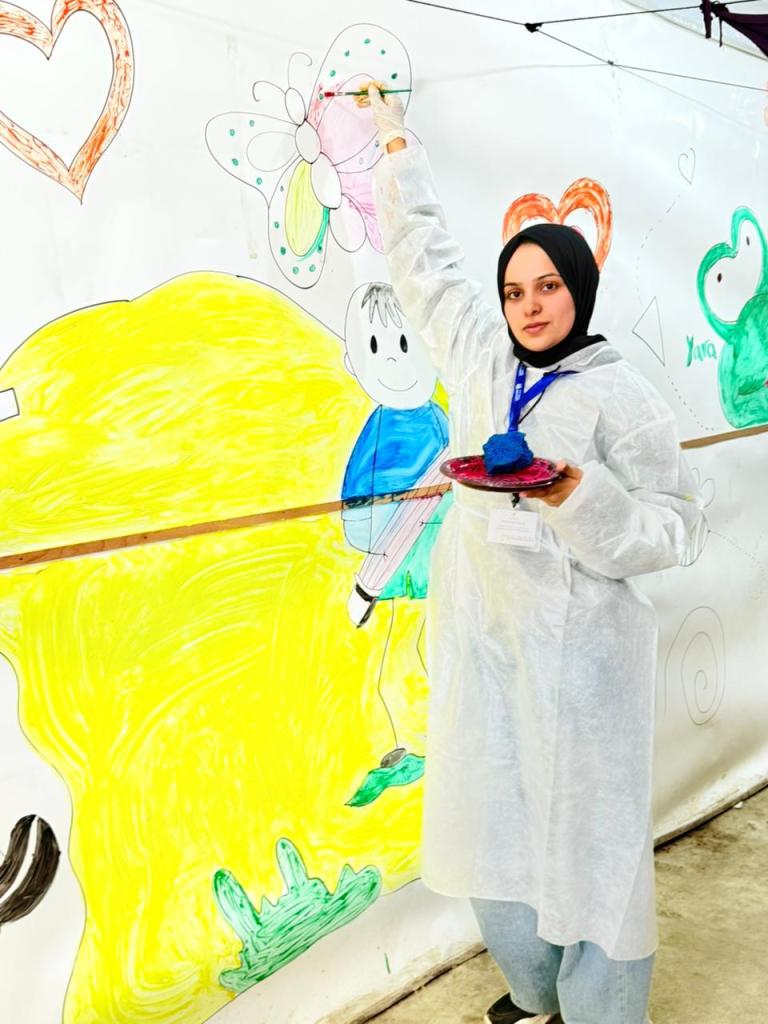
I want to tell you a story — not mine, but one that lives in my heart as if it were. It belongs to Walla, a friend and former colleague I worked with in Gaza. We were part of the emergency response team at Nasser Hospital, where I was her supervisor. She was in charge of provide guidance, support, and information to patients in some of the most critical moments of their lives at the emergency department.
A few days ago, Walla shared her story with me. It’s not just a story — it’s a cry for humanity, a testament to resilience, and a reminder that behind every headline, there are real people living through unimaginable pain.
She told me, “I’m trying to remember a specific moment, but it’s hard — because every moment here is a tragedy.”
She spoke of the so-called “safe passage,” a cruel irony where tanks line the roads and the air is thick with fear. She remembered Eid — a day meant for joy — when she chose to go to the hospital instead of celebrating, just to bring a smile to the faces of children. Between her and those children were bullets. And yet, she went.
She sees children every day — not just injured, but broken in ways no child should be. Children who have lost their parents, their limbs, their futures. She told me, “I always ask myself, how can they go on? How can I go on, knowing what they’ve lost?”
She once prayed, “Lord, let me die before I lose my hands or my legs.” That’s the kind of prayer people make in Gaza — not for long life, but for a death that spares them the slow unraveling of everything they are.
Displacement. Hunger. Fear. Loss. These are not just words here — they are the air people breathe. Even the simplest things have become dreams. Walla told me about chocolate — how it used to be her comfort, her way of cheering up friends. “Anyone who was upset, I’d give them chocolate,” she said. “Now, even that is a dream.”
And then she told me this:
“On a heavy morning, weighed down by hunger and exhaustion, a friend looked at her with dim, broken eyes, worn out from waiting. She whispered in a barely audible voice”:
“We haven’t eaten in three days… they say there are American aid distributions. Maybe we can get a bag of flour.”
She hesitated for a moment…
“I’m the one who sees wounded faces in the hospital every day, torn bodies, people who went there and never came back. But her face was too weak to bear rejection.”
She gently told her: “I’ll go with you.”
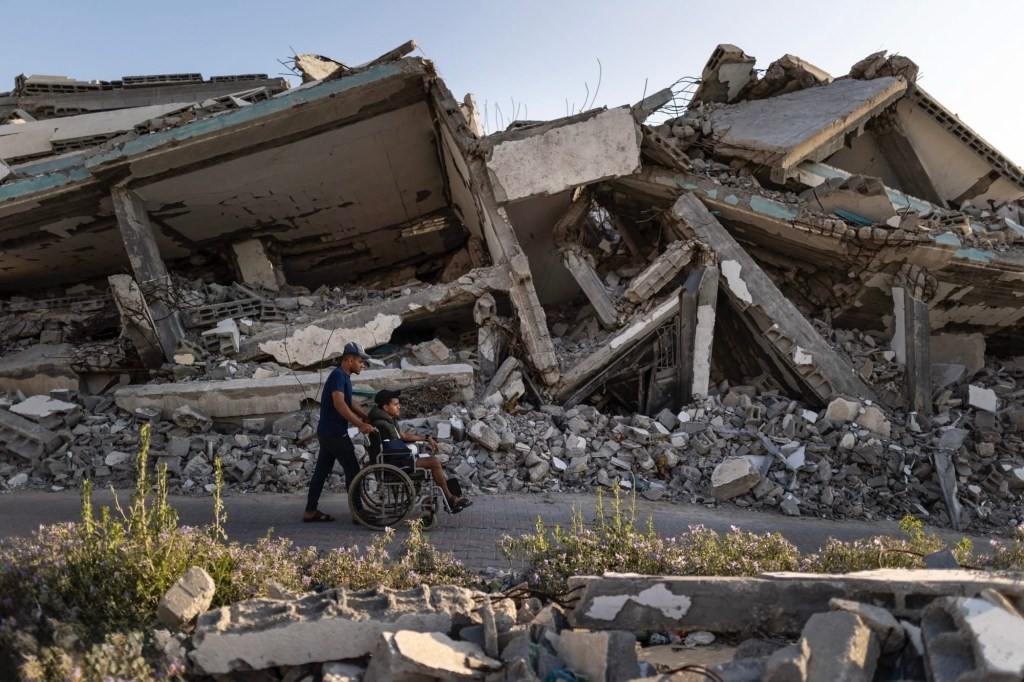
They walked for hours under a sun that felt like it was punishing them for their hunger. They moved through rubble, from street to street, every corner telling a story of death. She kept telling herself: Maybe we’ll make it, maybe we’ll come back with something that feeds our hearts some hope.
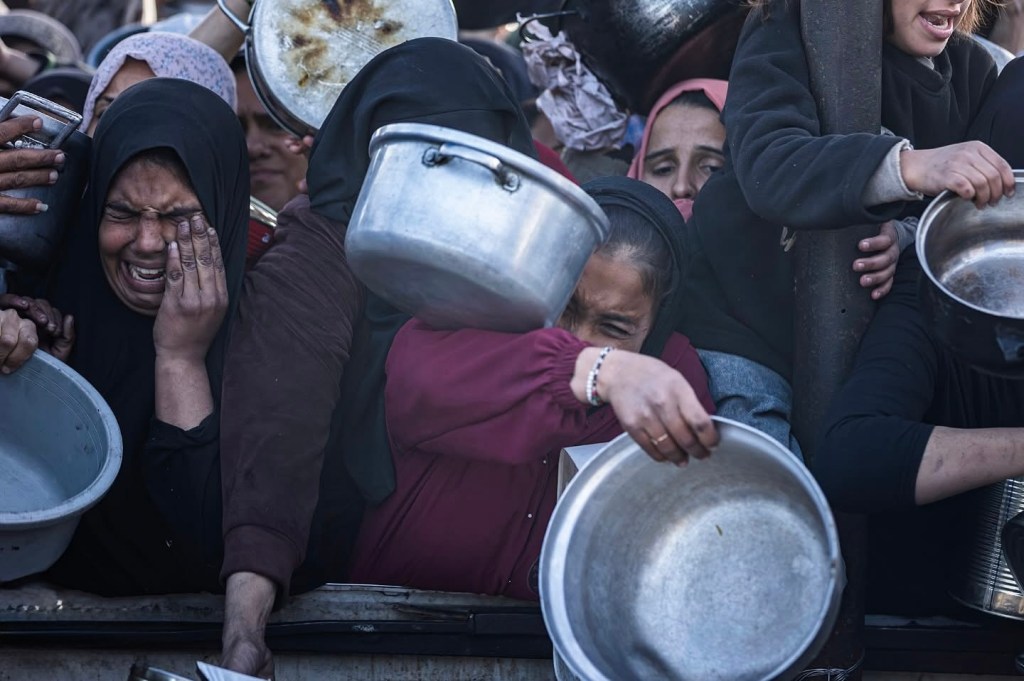
Finally, they arrived. Thousands of people were standing silently, pain drawn on their faces, the weight of waiting heavier than any sorrow.
They stood. They waited.
Then… silence fell with a thunderous sound.
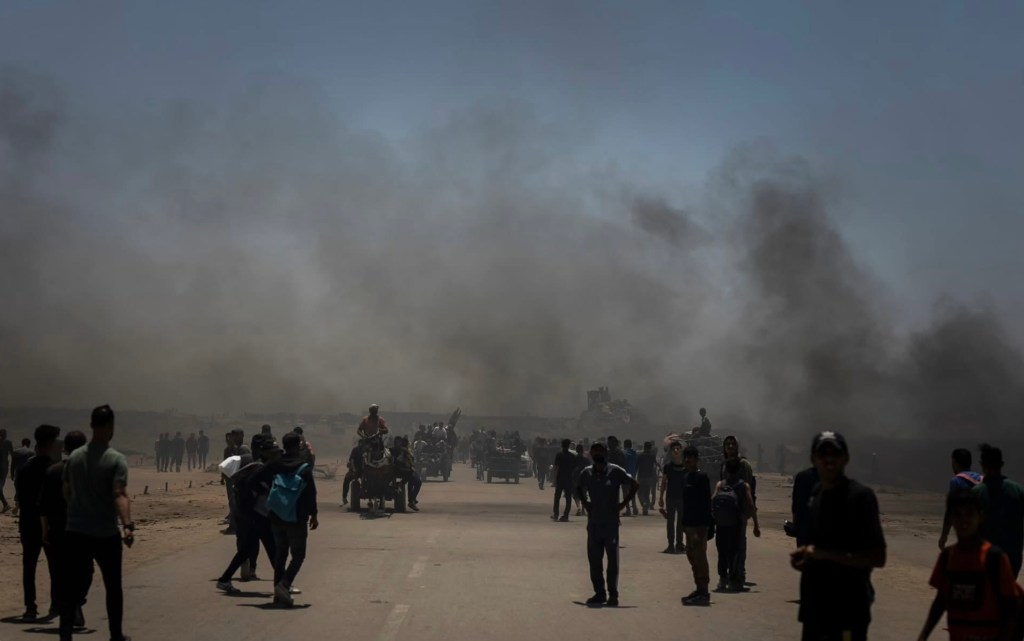
Bombing. Screaming. Blood. Smoke.
In a single moment, the aid area turned into a mass funeral. People were falling, screaming, running for cover, and Walla searched desperately for her friend.
Then, she found her… her friend’s leg was gone, her blood soaked the ground.
“I couldn’t speak. I couldn’t cry. I carried her in silence as I collapsed inside”.
The image I will never forget?
A young boy, holding a bag of flour… as if trying to protect it, or hug it one last time.
Walla came back home, but it wasn’t really her who came back.
A part of her stayed there, beside the blood, the pain, the bag of flour that became heavier than life itself.
In Gaza…
A bag of flour is not just flour.
It’s blood, loss, and silent tears.
It’s a meal wrapped in grief,
and a life stolen—every day—in silence.
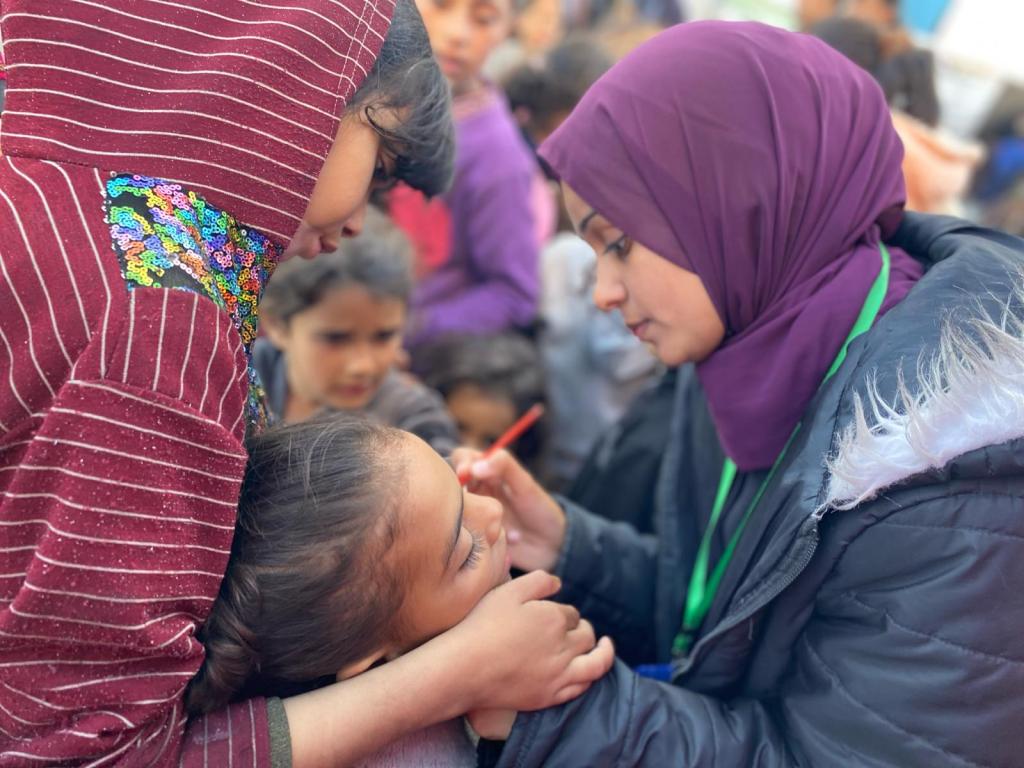
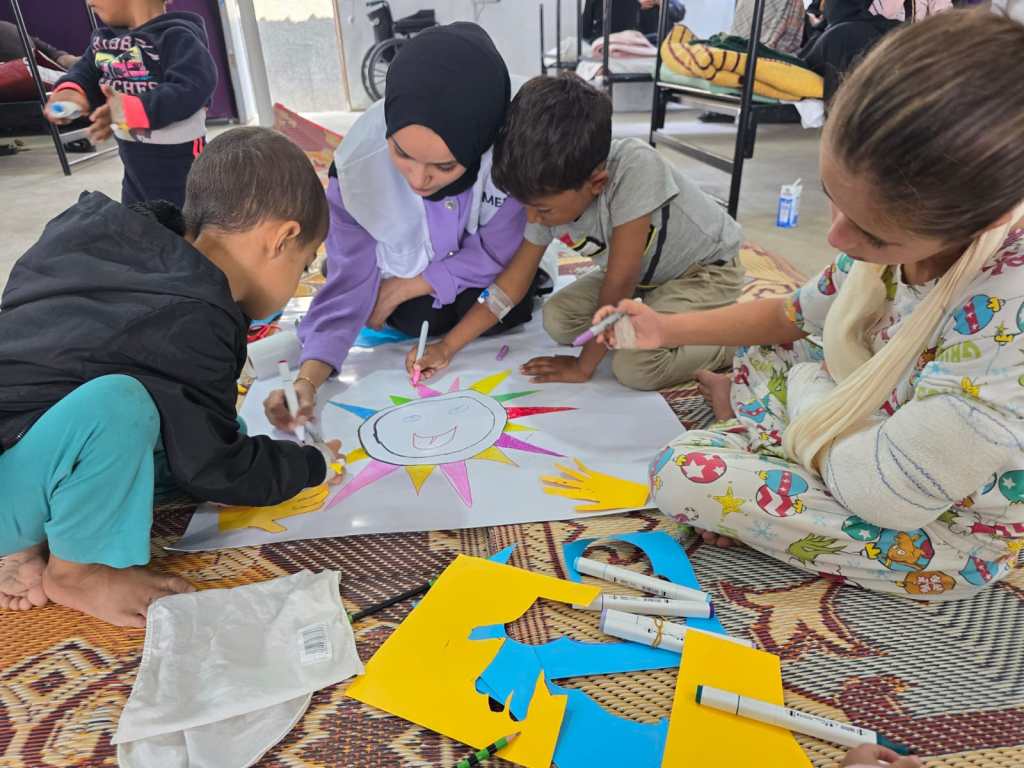
And still, Walla tries. She organizes events for children. She creates moments of joy in a place where joy is almost extinct. “I try to ease their pain,” she said, “even though I need someone to ease mine.”
She lives in a nightmare — of deaths, of hunger, of humiliation, of fear. And yet, she helps others. Because sometimes, helping others is the only way to survive yourself.
“There are so many stories,” she told me. “Life here is not life. I don’t know which story is more terrifying than the next. We live with death every moment. And we continue — not because we are strong, but because we have no choice.”
For almost two years, Gaza has lived through a genocide — in full view of the world. And the world watches.
“But we are not just numbers”.
Every person in Gaza has a name, a face, a story. A life that mattered before the bombs, and still matters now.
Please, don’t look away.
 Frontline Pulse