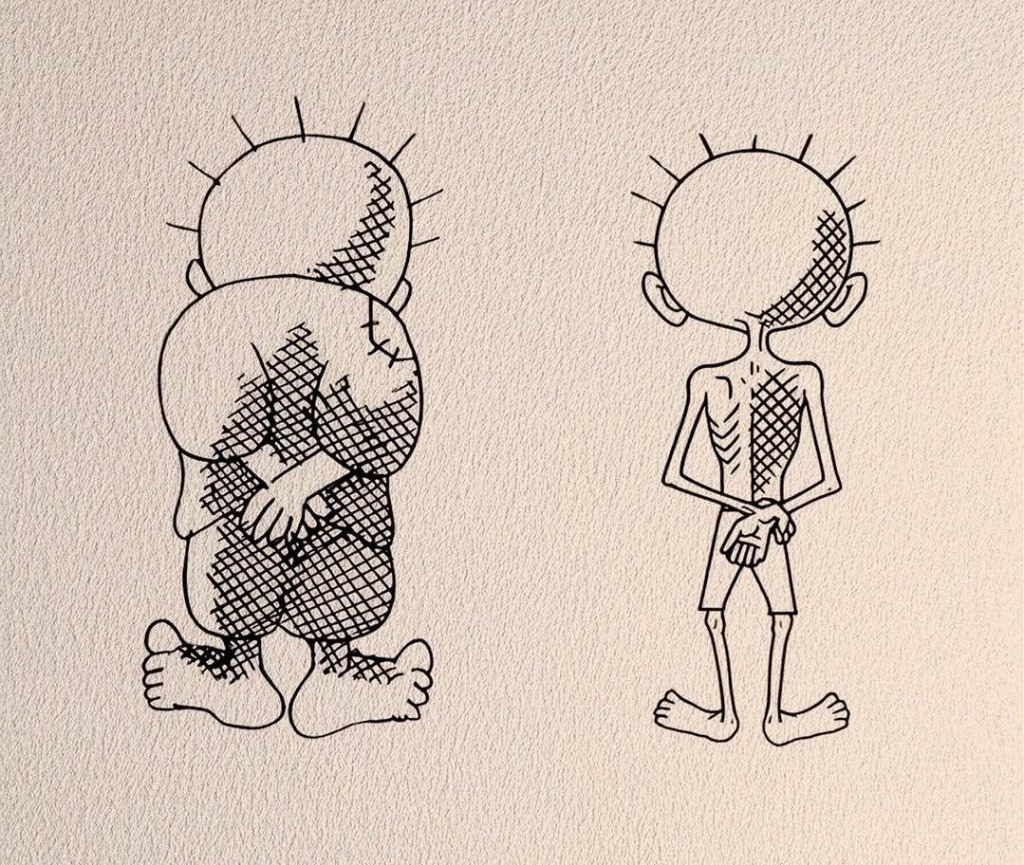
In Gaza, the morning doesn’t begin with birdsong or the smell of breakfast. It begins with silence — the kind that wraps around homes like a shroud. It begins with the sound of footsteps, small and slow, as children make their way to the communal kitchen, not for school or play, but for the chance — just the chance — to eat.
They carry empty pots, some too large for their tiny hands. Their faces are pale, their eyes sunken, their bodies thin and trembling. They wait in line for hours, from the first light of dawn until the sun is high and cruel in the sky. They wait because there is nothing else to do. Hunger has become their only routine.
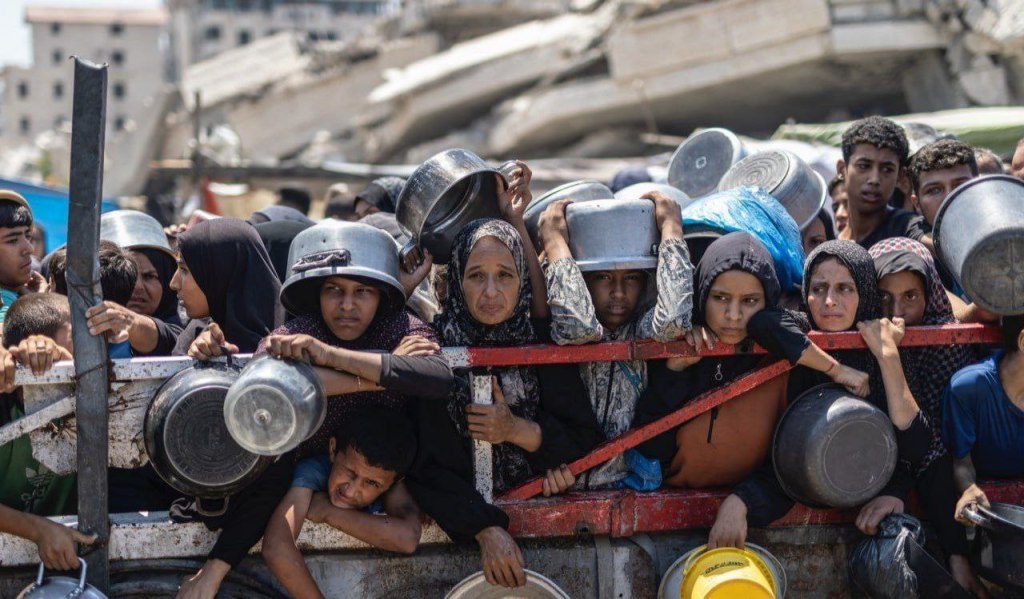
The line grows longer each day. Mothers send their children because they are too weak to stand. Fathers stay behind, their pride shattered, unable to bear the sight of their children begging for food. The kitchen volunteers do what they can, but the food is never enough. It runs out long before the line does.
One boy, Sami, no older than eight, stood in line for five hours. When he finally reached the front, the pot was empty. The volunteer looked at him with tears in her eyes and whispered, “I’m sorry.” Sami didn’t cry. He just nodded, turned around, and walked away. His pot was still empty, but now so was his hope.
At home, his little sister asked, “Did you bring food?” He didn’t answer. He just sat beside her and held her hand. She leaned against him, too tired to speak. They sat in silence, the kind that screams.

And then, there are the stories that break even the hardest hearts.
A nurse I once worked with — a kind, quiet man who had seen more suffering than most — told me something I will never forget. His little son, had been growing weaker by the day. One night, as they lay together on the floor of their darkened home, the boy whispered, “Baba, when I go to heaven soon… I want to eat everything. I want to eat bread, and meat, and cake, and fruit. I want to eat until I’m full.”
The nurse told me he smiled and nodded, but inside, something shattered. He held his son tighter, trying to memorize the weight of him, the sound of his voice, the warmth of his breath. Because he knew — he knew — that heaven might come sooner than anyone should ever have to imagine.
In Gaza, even dreams are rationed. A bowl of soup is a fantasy. A piece of bread is a miracle. And hope — hope is a fading light.
This is not just a story of hunger. It is a story of forgotten people. Of children who no longer dream of toys or birthdays, but of food. Of parents who pray not for riches, but for one more day with their children.
It is a story the world must hear — not tomorrow, not someday — but now.
Because no child should ever have to dream of eating in heaven.
 Frontline Pulse