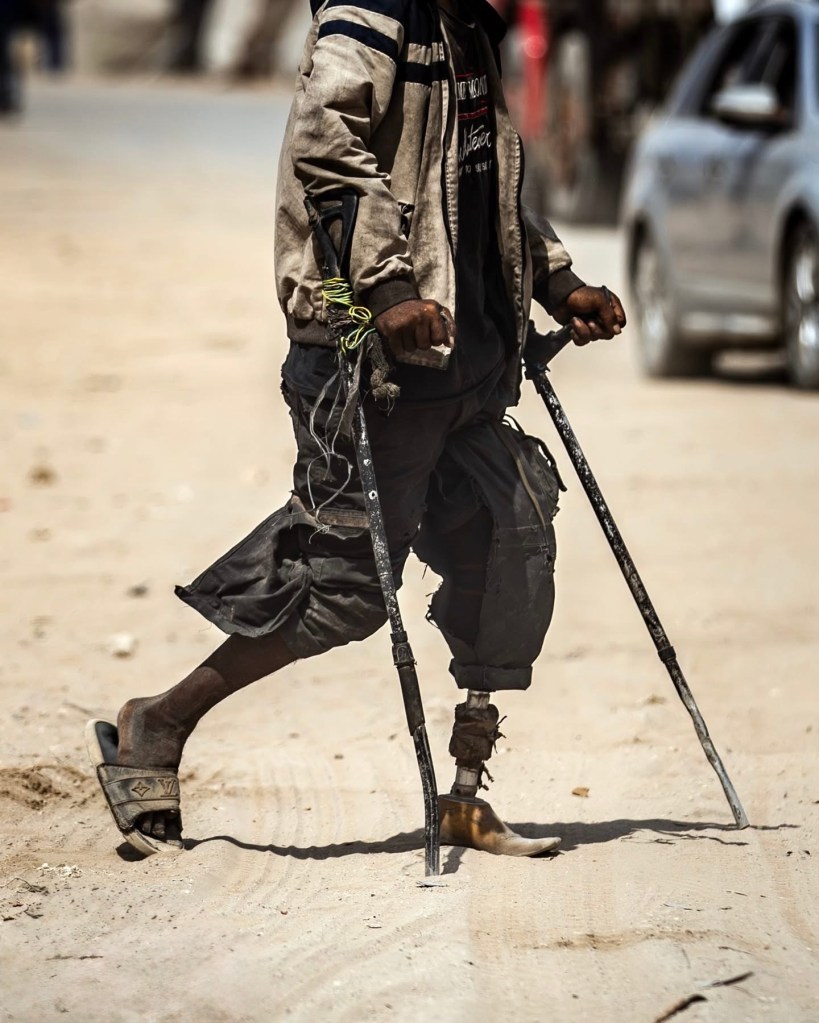
September 2025. Gaza.
The land trembles not only from bombs but from the footsteps of the displaced.
“The war has taught us to shrink the home into a bag. A house, once filled with laughter, memories, and generations, is now reduced to a few items hastily packed in the chaos of bombardment. A toothbrush. A photo. A Quran. A blanket. This war taught us to shorten the house in a bag.”
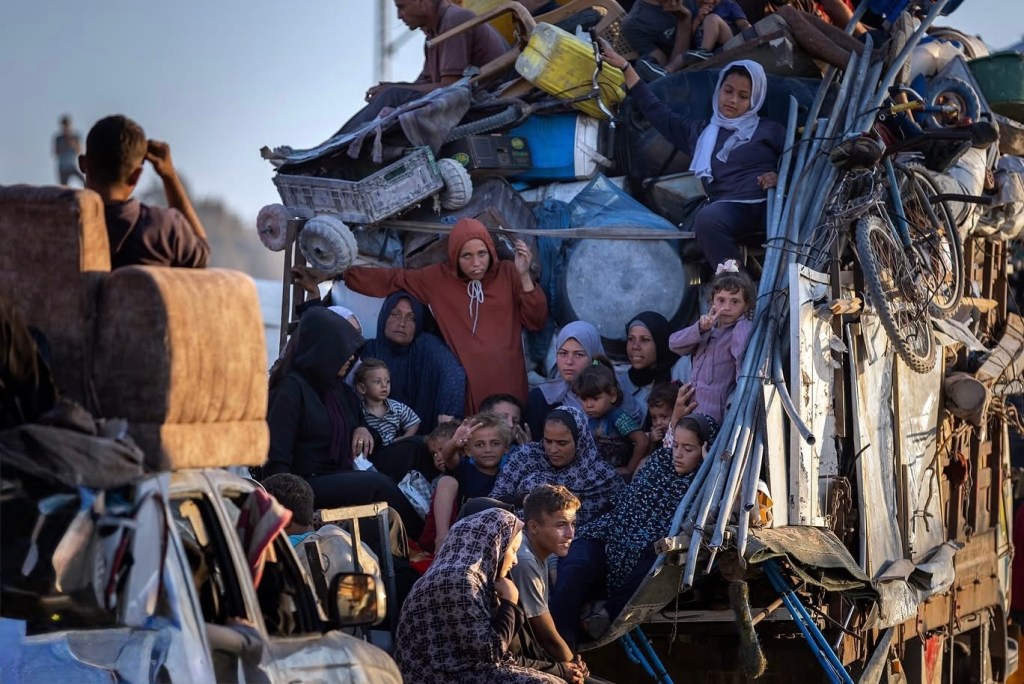
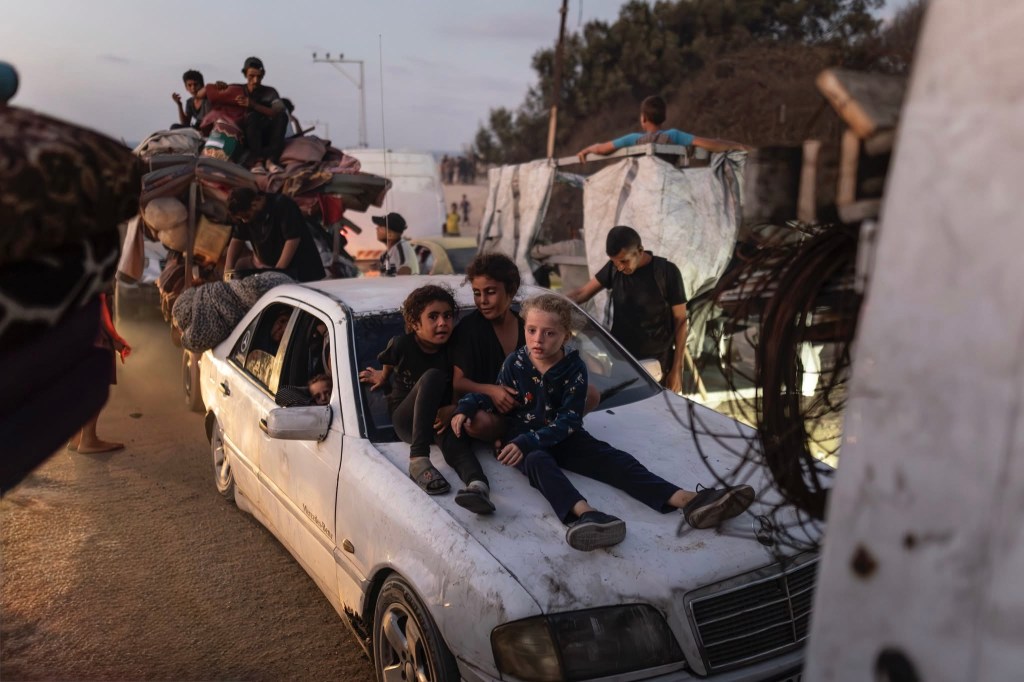
Since the collapse of the ceasefire in March, over 856,000 displacement movements have been recorded. In just three days, 60,000 Palestinians fled Gaza City as tanks rolled in . The roads southward—toward the so-called “humanitarian zone”—are choked with people. Some walk. Some ride. Some carry the elderly. Some carry the dead.
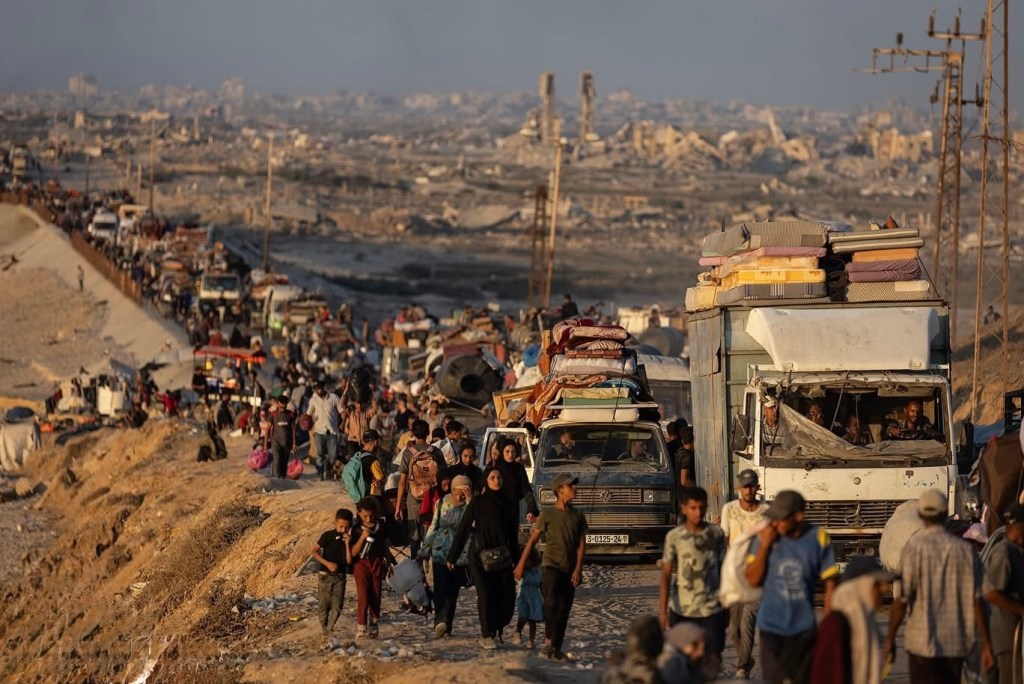
Displacement is carrying what remains of your life on the roof of a car and moving on without a destination.
Among them is Ne’man Abu Jarad, a father of six daughters and a grandfather. His family has been displaced eleven times since the war began. “It’s a renewal of the torture. We’re not being displaced, we’re dying,” he said
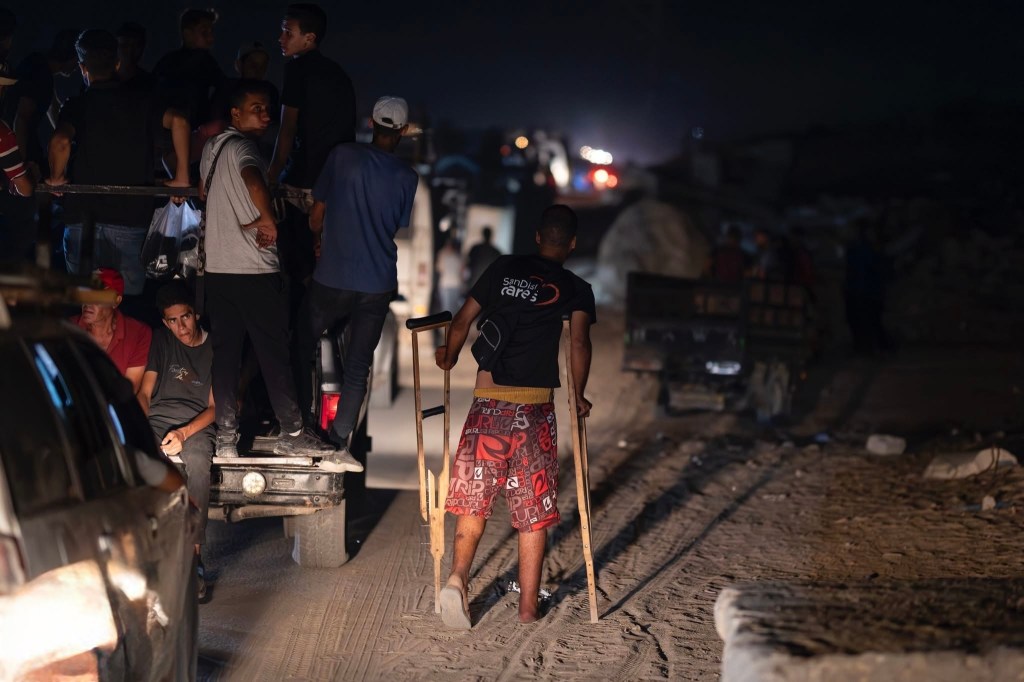
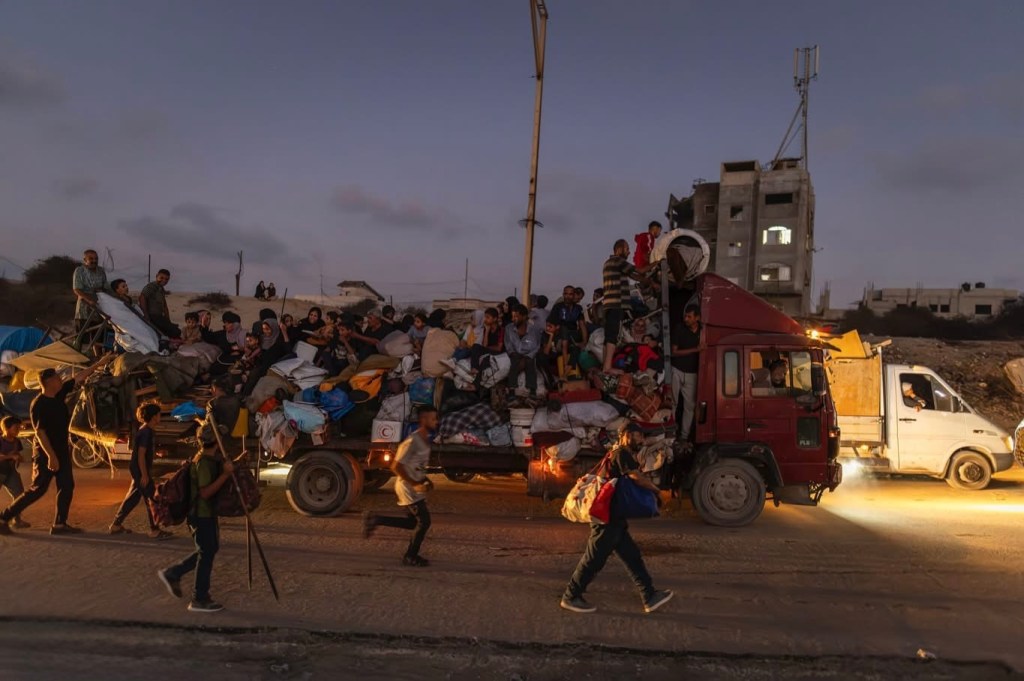
At night, the displacement continues. Families walk in the darkness burdened with fear and exhaustion, carrying what remains of their belongings in search of shelter and safety.
Children’s Resilience: Stories of Light in the Dark
Diana, a young girl displaced from Shujaiya, now lives in a school turned shelter. “Instead of studying in school, we’re living in it,” she said. “We carry a bag of clothes instead of a school bag”
Her voice echoes the longing of 660,000 children who remain out of school.
Misk, who lost her father in the war, said, “Two years of our lives were wasted. If it weren’t for the war, I would now be preparing for school, buying pens and school supplies. Now, we search for water and food”
Ruba, just six years old, overheard her father talking about returning to their destroyed home. She whispered, “Dad, tell him I hid my doll in the top drawer. Ask him to move it to the bottom drawer so if a thief comes, he won’t find it”. Her innocence and strategic thinking reveal the depth of children’s emotional intelligence even in crisis.
A young boy who lost his father and one hand in a bombing molded a clay house during therapy. He looked at the counselor and asked, “Now, will you bring my dad and give me my hand back?”. His grief was profound, but his act of creation was a step toward healing.
Malak, another child, searches for plastic and cardboard to use as fire starters. “We want the war to end,” she said. “We want to go home. We want to go back to school. We want to do something useful”
In Deir Al-Balah, a five-year-old girl was seen dragging large bottles of water, far too heavy for her small frame. She had devised a system—carry two, go back for the third, repeat every five meters. Alone, determined, and surrounded by destruction, she embodied resilience.
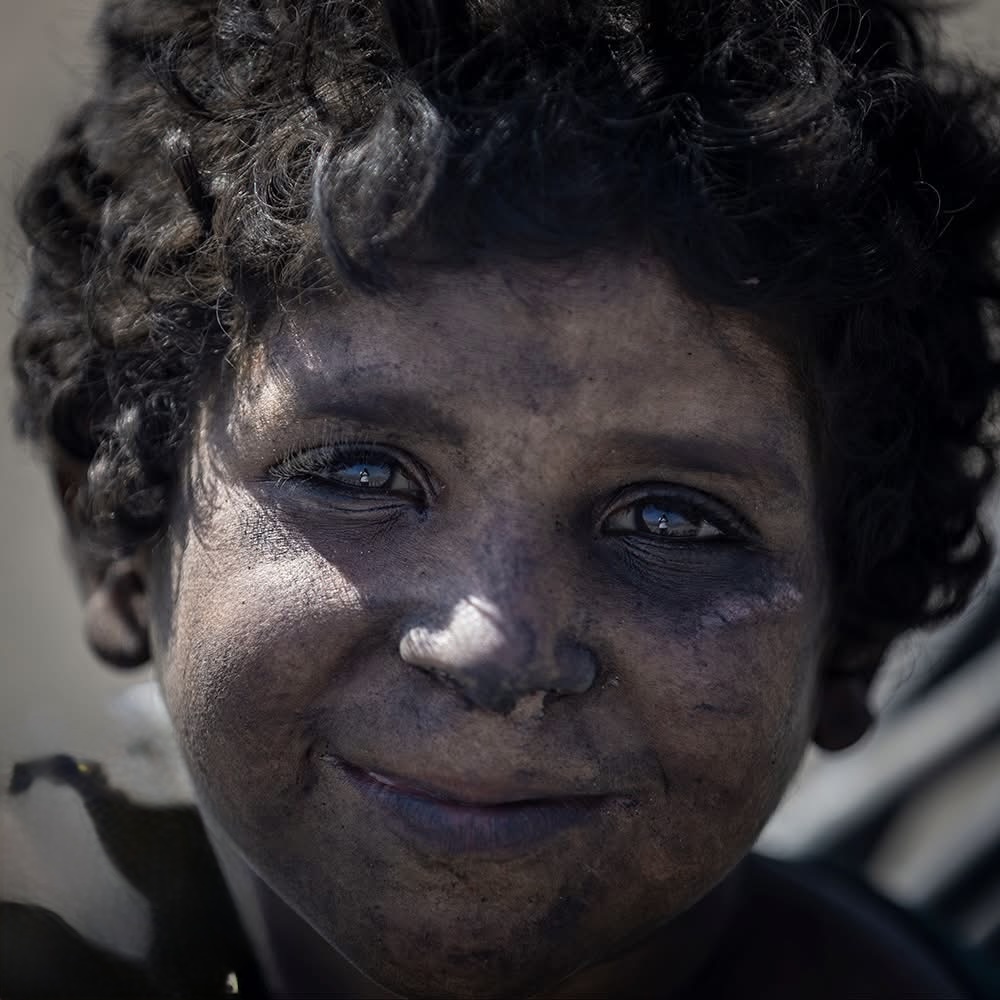
Aid and Hunger
Between 1 and 15 September, 12,500 metric tons of food aid entered Gaza—but 77% was looted or offloaded by desperate crowds
Only 35% of the daily required food is entering Gaza. Since the Zikim Crossing closed on 12 September, no food aid has reached northern Gaza, where a human-made famine was confirmed.
13,000 children were admitted for acute malnutrition treatment in July alone. 110 children have died from starvation-related complications
Sereen, a nurse and mother of two, fled Jabalia to save her children. Her breastmilk dried up from hunger. Her seven-month-old daughter weighs as much as a four-month-old. “I feel like I failed as a mother,” she said. “Your children’s hunger makes you feel like you are a bad mother”
And Yet, Hope
In Al-Mawasi area of Khan Yunis, field hospitals offer care. UNICEF dispatched 201,528 packs of nutrient-rich baby food and 10,000 boxes of high-energy biscuits. WHO delivered 891 pallets of medical supplies, including ICU beds and anesthesia machines, and distributed 527 wheelchairs, many to children who are now the sole survivors of their families
This story is not just about Gaza. It is about the human spirit. It is about resilience in the face of annihilation. It is about children who, despite everything, still dream of school, still protect their dolls, still carry water, still mold clay houses.
Because even when the house is shortened into a bag, the soul of Gaza remains unshaken.
Make a one-time donation
Make a monthly donation
Make a yearly donation
Choose an amount
Or enter a custom amount
Your contribution is appreciated.
Your contribution is appreciated.
Your contribution is appreciated.
DonateDonate monthlyDonate yearly Frontline Pulse